Direct answer
Answer in brief
Start with a truthful overview, not a finished catalog: authority, location, approximate scope, representative photos, condition, records, access, timing, and seller goals.
Gated seller process
From sign-collection inquiry to seller settlement
An inquiry advances only after fit, authority, scope, logistics, and written terms are resolved.
A seller inquiry moves through fit review and a written agreement before cataloging, auction, buyer fulfillment, reconciliation, and seller settlement.
- Inquiry: owner or authorized representative sends scope, location, timing, representative photos, records, access, and goals
- Human review: auction company reviews property type, volume, condition, bidder fit, logistics, authority, timing, and required work; it may produce a preliminary auction-planning opinion
- Written agreement: accepted scope, parties, responsibilities, fees, expenses, terms, schedule, custody, unsold property, and settlement are documented
- Preparation and catalog: accepted property is inventoried, lotted, photographed, and described with visible facts, supplied records, and uncertainty separated
- Auction and fulfillment: catalog is marketed and closed, buyer payment and pickup or shipping are coordinated under event terms
- Reconciliation and settlement: sold lots, agreed charges, exceptions, and unsold property are accounted for under the signed agreement
You do not need to clean, price, or inventory every sign before contacting an auction company. A useful inquiry shows who may authorize a sale, what and how much property exists, location, condition range, records, access, exclusions, and timing.
Submitting a Bidding Is Open seller form requests a free preliminary auction-planning collection appraisal and fit review. The submission itself is not a completed appraisal; only a later human review of the supplied information may produce a preliminary auction-planning opinion. It is never a certified or purpose-specific appraisal report and is not for real estate, insurance, tax, charitable-gift, court, or lending use. Submitting is not property acceptance, an offer, agreement, authority to advertise or sell, or a sale or price guarantee. A fitting collection still requires a separate written agreement.
What A Useful First Inquiry Includes
| Information | Useful first-review detail | Why it matters |
|---|---|---|
| Authority | Owner or authorized representative, decision-maker, estate or business role, unresolved claims | Property should not enter scope before the right person can authorize decisions. |
| Collection scope | Approximate sign count, major categories, rooms, walls, racks, boxes, pallets, and standout groups | Auction fit depends on the complete workload and buyer story, not only one highlight. |
| Location and access | City, storage type, stairs, doors, loading area, utilities, vehicle access, and deadlines | Review, intake, photography, removal, pickup, and freight all depend on real site conditions. |
| Representative photos | Wide views plus ordinary pieces, highlights, backs, edges, labels, damage, repairs, and packaging | A balanced photo set reveals volume and condition without pretending to authenticate remotely. |
| Records and provenance | Receipts, prior catalogs, labels, correspondence, photos, restoration notes, and source of family history | Records can support catalog research when they remain connected to the right object. |
| Seller goals | Timing, exclusions, desired outcome, move or estate deadline, and questions about scope | A workable plan needs priorities and constraints before terms are proposed. |
The collection preparation checklist goes deeper. Photograph broadly before moving anything: highlights, average pieces, mixed condition, duplicates, boxed material, mounting, and access. Context beats hundreds of unlabeled close-ups.
Photograph Sign Evidence Without Turning It Into A Claim
Porcelain And Painted Metal Signs
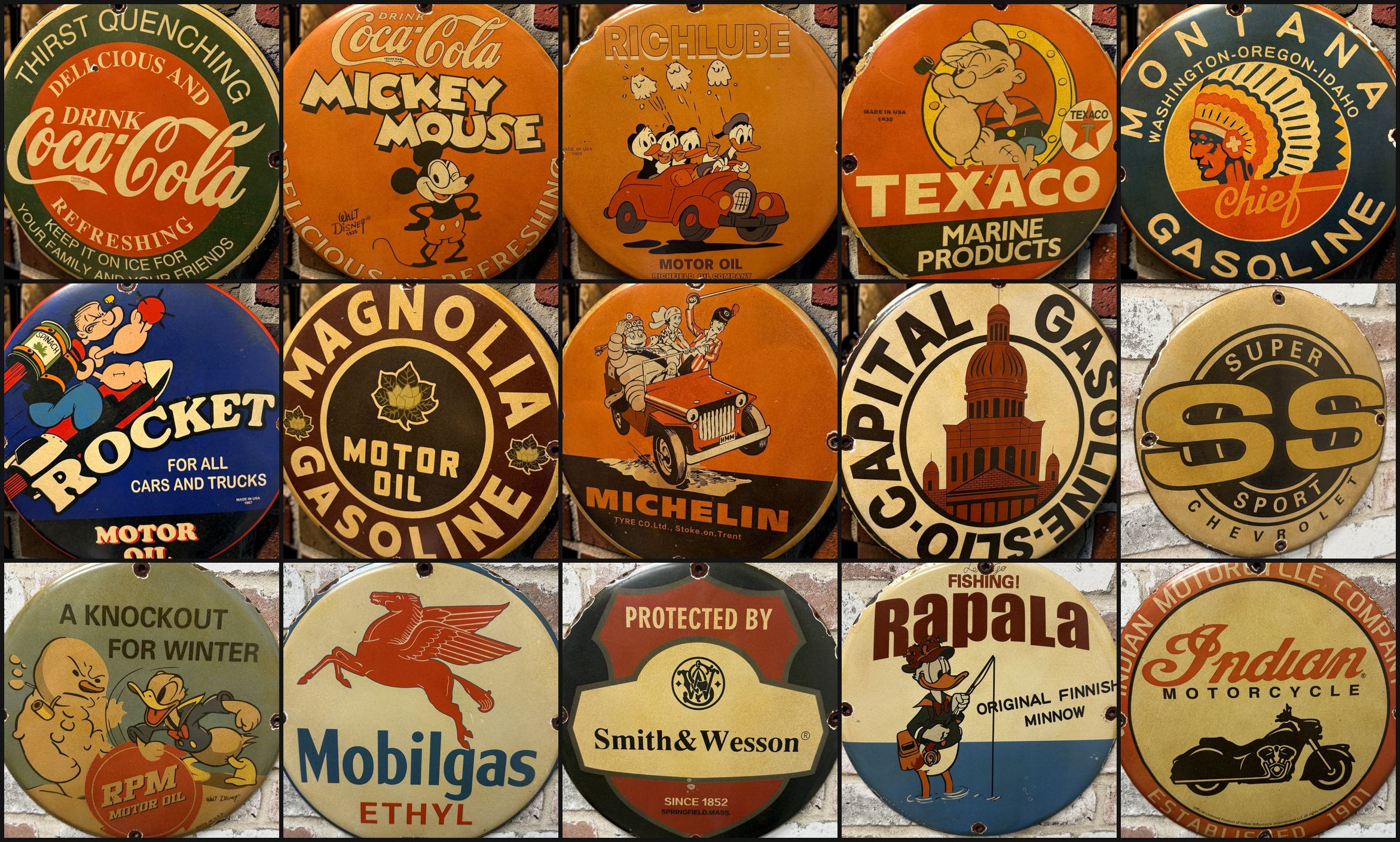
For representative porcelain or enamel signs, photograph the face in neutral light, back, edges, corners, mounting, dimensions, construction, marks, damage, repaint, restoration, and unusual wear. Identify painted-metal material only as confidently as evidence allows.
No magnet, rust, grommet, chip, gloss, weight, or logo observation alone proves age or authenticity. Originals and reproductions can share traits, while repair or artificial wear can mislead. Use “seller states,” “appears,” or “classification uncertain” when appropriate.
The National Park Service's Preservation Brief 25 says age evidence should not automatically be erased and extensive work belongs with qualified specialists. It is not an authentication or price guide.
Neon And Electrical Signs
Show the cabinet, faces, glass, electrodes, supports, transformer or power supply, wiring, labels, mounting, animation, repairs, and missing or loose components before moving them.
Do not energize unknown vintage wiring for an inquiry. “Lights” is an observation, not certification of safety, compliance, originality, or future performance. Record who tested what and use a qualified sign or electrical professional when needed.
Records, Boxes, Parts, And Oral History
Keep receipts, catalogs, labels, brackets, transformers, keys, stands, hardware, boxes, manuals, and repair notes with the right object. Photograph the association before separation.
Record family history as a sourced statement, not established provenance. A memory is a lead, unlike a dated photograph or receipt. Old appraisals and asking prices do not guarantee identity, authenticity, demand, or auction value.
Organize The Collection Without Destroying Context
Create a rough category map: porcelain, painted metal, neon, clocks, dealership material, automobilia, paper, parts, reproductions, uncertain pieces, and oversized property. Mark storage location and approximate count.
Separate—but do not discard—these categories:
- property the owner or family will keep;
- borrowed, leased, titled, jointly owned, or disputed items;
- reproductions already known as reproductions;
- uncertain pieces requiring more research;
- repaired, restored, incomplete, or damaged items;
- loose neon glass, transformers, cords, brackets, and matching parts; and
- private documents or personal material unrelated to the sale.
Avoid aggressive cleaning, repainting, drilling, rewiring, disassembly, or testing. Changes can remove marks, labels, repair clues, or surface evidence and create electrical, glass, chemical, lifting, or structural risk.
What The Later Human Review May Decide
A human fit review considers property type, volume, condition, records, bidder interest, location, access, authority, logistics, timing, cataloging, and fulfillment. When the supplied evidence supports it, that review may produce a preliminary auction-planning opinion. There is no universal item-count minimum or guarantee every item will be accepted.
Outcomes may include deeper review, more records, narrower scope, phased sale, referral, or no fit. Inquiry must remain distinct from acceptance.
For an estate, trust, business dissolution, lien, disputed ownership, or reporting requirement, identify authority and professional roles early. See estate and collector consignments or large collection auction services.
Put The Commercial Decisions In A Written Agreement
Florida Statutes section 468.388 requires a written agreement with the owner or agent before a covered auction. It specifies the owner, employing person if different, and terms for receiving property and remitting proceeds. Read the current text; this is not legal advice.
The agreement should be read as the controlling engagement document. Depending on the facts, decisions to resolve can include:
- parties, authority, accepted property, inventory, and exclusions;
- custody, access, transport, storage, and insurance responsibilities;
- cataloging, lotting, marketing, and sale format;
- commission, expenses, reserves or minimums if any, and withdrawal;
- pickup, shipping, unsold property, and site-removal responsibilities; and
- records, proceeds, exceptions, settlement, signatures, and required review.
Florida DBPR advises sellers to consider specialty and references, verify the named auctioneer's credential, obtain an inventory, and receive the written contract. Use the live record for current status.
What Happens After An Agreement
The detailed auction seller process follows a gated sequence:
- Control scope. Confirm property, exclusions, records, access, and decision-makers.
- Inventory and lot. Group property using evidence, buyer interest, condition, and logistics.
- Catalog. Separate visible facts, supplied information, and uncertainty.
- Offer. Publish and market the catalog and answer material questions.
- Fulfill. Coordinate payment, pickup, packing, shipping, or freight.
- Settle. Account for sold lots, charges, exceptions, and unsold property under the agreement.
Results remain uncertain. Property, documentation, competition, market conditions, terms, and logistics matter; a fit review or estimate is not a guaranteed price.
Common Seller Mistakes
- Showing only the rarest sign. Include ordinary condition, duplicates, and total volume.
- Cleaning before documenting. Photograph first and leave uncertain surfaces unchanged.
- Separating parts and records. Keep labels, boxes, brackets, transformers, receipts, and notes with the right sign.
- Calling every uncertain piece original. Distinguish evidence, seller history, expert opinion, and unresolved classification.
- Moving before access and scope are planned. The original location may reveal count, matching groups, condition, and loading needs.
- Treating an inquiry as an agreement. Acceptance, authority to sell, fees, schedule, and settlement require the later written step.
Frequently Asked Questions
Do I Need A Complete Inventory Before Contacting An Auction Company?
No. A rough count by category, wide location photos, representative details, authority, access, records, and timing can support an initial fit review. A detailed inventory may follow only if the engagement moves forward.
Should I Clean Porcelain Signs Before Taking Photos?
Usually avoid aggressive cleaning before review. Photograph the sign as found, including backs, edges, labels, wear, chips, repairs, and dirt patterns. Ask before altering a historic or uncertain surface.
Will Every Sign Be Accepted For Auction?
Not necessarily. Scope depends on condition, documentation, bidder fit, logistics, restrictions, expected value, and workload. Clearly identified reproductions may fit, but no category is automatically accepted.
Does Bidding Is Open Publish One Consignment Rate?
No. Terms are quoted after the property, expected value, location, logistics, timing, and cataloging workload are understood. The written agreement controls fees and responsibilities.
Does Submitting The Seller Form Commit Me To A Sale?
No. It requests a free preliminary auction-planning collection appraisal and fit review. The submission is not a completed appraisal; only a later human review may produce a preliminary auction-planning opinion. That opinion is not a certified or purpose-specific appraisal report. Submitting is not property acceptance, an offer, consignment agreement, authorization to advertise or sell, or a sale or price guarantee.
Can You Guarantee What My Collection Will Bring?
No. Outcomes depend on property, evidence, terms, competition, market conditions, timing, and fulfillment. A prior sale, asking price, appraisal, or estimate does not guarantee a result.
Sources And Further Reading
- Florida Statutes section 468.388 — written owner-agreement and auction-conduct requirements for covered Florida auctions; consult qualified counsel for a specific matter.
- Florida DBPR tips for hiring licensed professionals — specialization, references, license checks, inventory, and written-contract guidance.
- Florida DBPR Auctioneers — official licensing context and current service links.
- Preservation Brief 25: The Preservation of Historic Signs — historic-sign material and preservation guidance, not authentication or valuation of a specific sign.
- How the Auction Seller Process Works and How to Prepare a Collection — current Bidding Is Open inquiry, preparation, agreement, sale, fulfillment, and settlement guidance.
Related Bidding Is Open Guides
- Complete auction seller process
- Prepare a collection without losing evidence
- Review large collection auction services
Next Step
Request a free preliminary sign-collection appraisal and fit review with your role and authority, property location, approximate count and categories, representative wide and detail photos, known records, access constraints, exclusions, and desired timing. The submission requests a later human review; it is not a completed appraisal, property acceptance, offer, agreement, authority to sell, or sale or price guarantee. Any preliminary opinion is for auction planning only, not real estate, insurance, tax, charitable-gift, court, or lending use.