
Catalog status
Verified closed
At the recorded source check, HiBid listed Bid on Porcelain & Neon Roadside Advertising - Last Call with 238 catalog and final-report records in a timed online only auction. The published bidding window was August 11–17, 2026. No defensible exact first-lot closing time is published on this permanent record. The verified date window is shown without inventing a time.
Published soft-close rule: The historical event used a timed soft close; this archive omits a conflicting closing-hour statement and does not reconstruct an unverified extension interval. These are historical event terms, not current bidding instructions.
Descriptive or promotional language in an event title or lot title is catalog wording. It is not, by itself, an independent finding about identity, age, maker, material, originality, condition, operation, rarity, or value. Review the preserved HiBid lot record for the published description, photographs, terms, and transaction evidence.
Published terms and buyer responsibilities
- The historical catalog described modern vintage-style reproduction displays. This archive makes no period-original, age, licensing, or endorsement claim.
- The retained final report contains 238 records: 200 recorded sold, nine passed, and 29 not clerked.
- Nationwide shipping was offered with quote approval; the historical terms stated a 5% handling charge.
- Pickup was offered under the completed event terms.
Historical evidence note: terms not shown here were not recovered or independently verified for this archive and have not been invented. Use the archived HiBid record and retained event documents for the surviving transaction evidence.
HiBid controls registration, bids, individual lot records, timers, extensions, status, invoices, results, and the transaction record. Use the linked archived records for the preserved sale evidence.
Modern roadside-advertising neon and porcelain displays should be evaluated as later decorative objects with real material, electrical, structural, packing, and installation requirements; the road culture they evoke supplies historical context, not period age, corporate affiliation, or safe destination use.
Roadside-advertising display research guide
A roadside image becomes a household object only after the route, structure, power, and display context are solved
Historic roadside signs were designed for distance, motion, darkness, weather, architecture, and commercial competition. Scale, silhouette, illumination, repeated symbols, and placement worked together. Federal highway history also shows that outdoor advertising became part of a wider policy debate over the visual character of road corridors.
Moving that visual language into a garage, collection room, business, or residence creates a new physical problem. A display needs a supported route from auction site to destination, appropriate electrical evaluation, a mounting or standing plan, and enough clearance to be viewed and serviced safely.
Roadside design was built for a place and viewing condition
National Park Service sign and gas-station guidance treats signs as part of a larger setting. A canopy band, pole sign, pump graphic, wall panel, and neon cabinet had relationships to the building, street, service, and travel route. Smithsonian's Hamons Court sign preserves place, maker, material, use, and ownership information alongside the object.
A new decorative display can quote that scale or graphic without sharing the site history. Describe its actual dimensions and intended modern setting. Avoid calling it an artifact from a station, dealer, highway, or business unless object-specific evidence connects it to that place.
The destination is part of the acquisition record
Before bidding, identify whether the display is free-standing, framed, wall-mounted, double-sided, outdoor-rated, indoor decorative, or incomplete. Record center of gravity, support points, cabinet depth, projecting glass, access panels, cord and switch location, heat and service clearances, and the route through gates, doors, stairs, and turns.
A historic-looking graphic does not make modern electrical and structural requirements disappear. Landlord approval, local sign rules, electrical work, wall structure, weather exposure, egress, fire considerations, and qualified installation may limit where the object can be used.
What can influence value for a modern roadside-style display
Value combines decorative demand with fabrication, completeness, condition, and the cost of getting the object safely into service.
- Design presence
- Scale, silhouette, typography, color, animation, sidedness, brightness, and viewing distance affect how well the piece works in a space.
- Material execution
- Actual enamel, substrate, formed glass, supports, cabinet metalwork, access, frame, finish, and mounting details shape quality.
- Electrical completeness
- Known and compatible power components, intact tubing, enclosure, cord, switch, grounding provisions, and service documentation affect cost.
- Repair and alteration
- Replacement tubes, transformers, wiring, repaint, enamel chips, cabinet dents, frame changes, and improvised mounts should remain visible in the comparison.
- Landed display cost
- Disconnection, crate, freight, accessorials, wall or floor support, electrical work, permits, installation, and service access can exceed the hammer difference.
Compare a modern roadside-style display with objects of the same age class, size, construction, condition, and included system. Historical brand or station significance does not transfer automatically.
How to research availability without inheriting a historic sign's rarity
The supply of an original station sign and the supply of later displays using similar graphics are separate populations.
- Classify the object: Record modern reproduction, fantasy design, later interpretation, licensed reissue if evidenced, custom display, or unresolved category.
- Define the configuration: Document dimensions, shape, sidedness, graphic, enamel, tube colors, cabinet, frame, power system, and mounting.
- Research the graphic history: Use dated advertising, institutional objects, photographs, and gas-station records to identify the visual source without dating the display.
- Research the modern issue: Seek fabricator identity, catalogs, invoices, serials, edition statements, production dates, and matching later examples.
- Compare like with like: Keep period originals, restored originals, licensed later issues, reproductions, fantasy pieces, and one-off commissions in separate counts.
When maker or production evidence is missing, report observed availability and the modern construction facts rather than a speculative rarity conclusion.
Age, affiliation, restoration-state, electrical, and environmental boundaries
A display's graphic can evoke a company and era without having been manufactured, licensed, installed, or serviced by that company.
- Material-age separation
- Real glass tubing and porcelain enamel can belong to a modern object; vintage style is not vintage manufacture.
- No brand affiliation
- Depicted names and marks identify subjects only unless records establish authorization; this archive does not imply endorsement.
- Repair-state language
- Preserved, rehabilitated, restored, repaired, rewired, and newly fabricated describe different work and should not be used interchangeably.
- Electrical and structural review
- Illumination does not settle wiring, grounding, moisture, components, mounting, wall load, wind, outdoor suitability, or code compliance.
- Tube handling
- Broken glass, exposed electrodes, and tubes that may contain mercury require specialist handling and appropriate recycling—not ordinary crushing or disposal.
Solve pickup, packing, freight, and installation before setting the maximum bid
The route home is a sequence: safe disconnection, controlled handling, protective packing, carrier network, receiving, storage, and final installation.
- Survey origin access
- Confirm object and packed dimensions, weight, stairs, doors, loading area, equipment, power status, frame, and who is authorized to disconnect it.
- Create a condition baseline
- Photograph illuminated and unlit faces when safely available, every tube, back, components, mounts, repairs, and pre-existing damage.
- Engineer the package
- Support structural metal independently, protect enamel and edges, provide glass clearance, immobilize components, and design blocking and bracing for the transport mode.
- Specify carrier needs
- Freight dimensions, value, fragility, liftgate, limited access, appointment, declared-value or cargo terms, and receiving equipment must be resolved.
- Prepare the destination
- Complete structural and electrical review, service access, mounting, local approvals, and a safe lifting plan before the crate is opened for installation.
Authoritative research sources
These institutional and government sources explain the research method and safety boundaries. They do not authenticate, appraise, test, or certify any auction lot.
- National Park Service Preservation Brief 25: The Preservation of Historic Signs — Historic sign materials, development, documentation, change over time, preservation principles, and specialist-repair boundaries.
- National Park Service Preservation Brief 46: Historic Gas Stations — Gas-station history and preservation context, including porcelain-enamel facades and the relationship between architecture, service, and branding.
- National Park Service: Route 66 — How to Preserve Your Sign — A condition-first preservation approach for documented historic roadside signs.
- Smithsonian National Museum of American History: Hamons Court Neon Sign — A documented steel, glass, and neon Route 66 object with maker, place, use, and ownership history.
- Federal Highway Administration: How the Highway Beautification Act Became Law — Federal history of outdoor-advertising control along the Interstate and Federal-aid primary systems.
- The Neon Museum: Preservation in Action — Condition assessment, historical research, original-material preservation, and specialist metal, glass, wiring, structural, transport, and testing work.
- UL Solutions: The Signs Are Everywhere — UL 48 and electric-sign safety context, including corrosion, moisture, wiring, construction, and installation concerns.
- U.S. Environmental Protection Agency: Light Systems and Demolition — Some neon systems may contain mercury and should remain intact for appropriate handling and recycling rather than being crushed.
Recorded auction outcomes
Selected results from this completed event
These are dated hammer results from this auction's retained transaction record. A hammer result is the accepted bid before the buyer's premium, tax, shipping, handling, and other applicable charges; it is not the buyer's total cost, a present asking price, an appraisal, or a prediction of another object's result. Titles may be condensed from retained catalog or result-report wording.

Lot 106948 · Archived catalog photograph
Mobilgas Pegasus Neon Porcelain Sign
The retained final report records a $1,500 hammer price for Lot 106948. Open the direct HiBid lot record for its historical catalog wording and photographs.

Lot 139148 · Archived catalog photograph
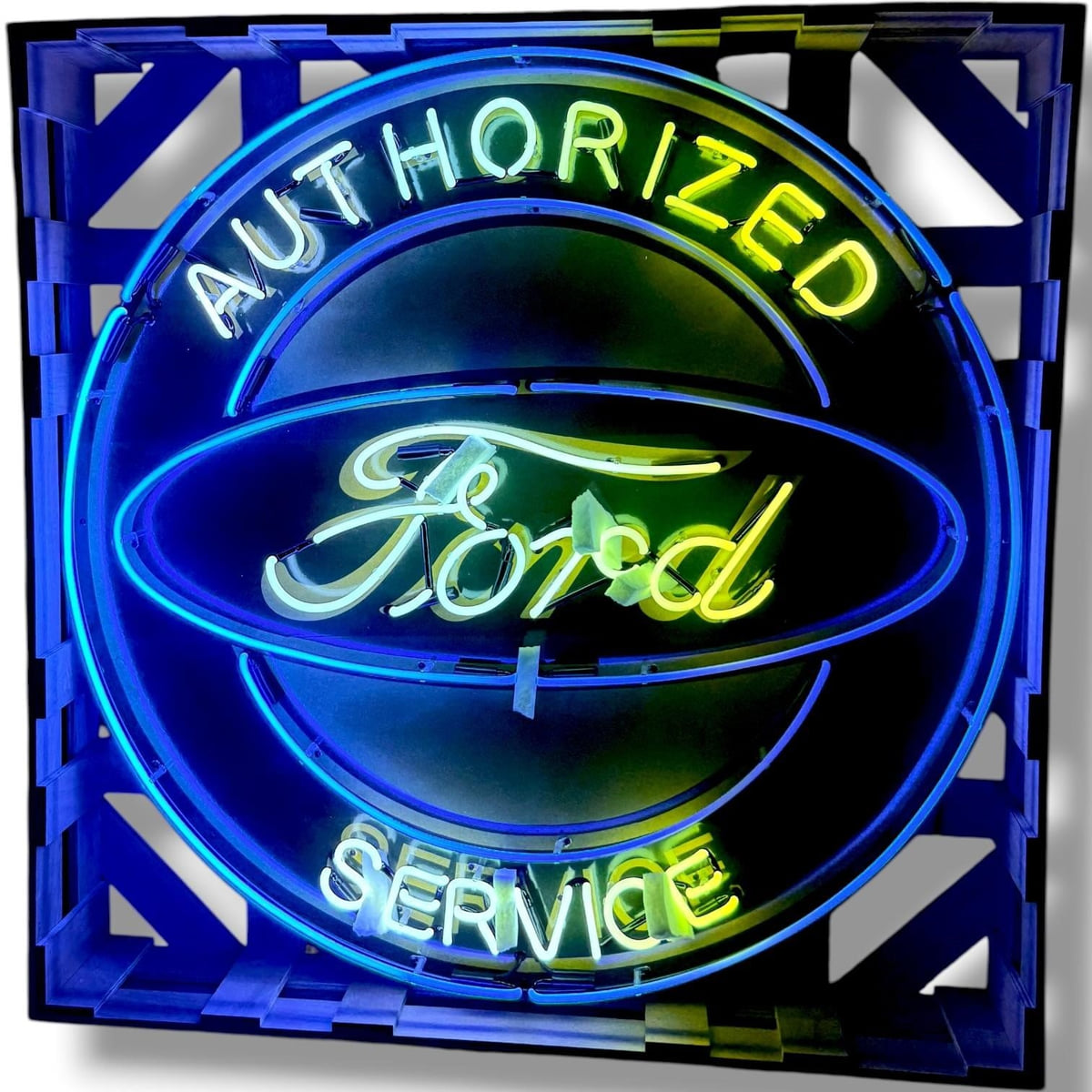
Ford Authorized Service Neon Porcelain Sign
The retained final report records a $1,500 hammer price for Lot 139148. Open the direct HiBid lot record for its historical catalog wording and photographs.

Lot 28636 · Archived catalog photograph
Phillips 66 Shield Neon Porcelain Sign
The retained final report records a $1,000 hammer price for Lot 28636. Open the direct HiBid lot record for its historical catalog wording and photographs.

Lot 151330 · Archived catalog photograph
A&W Root Beer Glass Enamel Sign
The retained final report records an $800 hammer price for Lot 151330. Open the direct HiBid lot record for its historical catalog wording and photographs.

Lot 125636 · Archived catalog photograph
Reddy Kilowatt Neon Porcelain Sign
The retained final report records an $800 hammer price for Lot 125636. Open the direct HiBid lot record for its historical catalog wording and photographs.
These are archived actual-item photographs from this completed Bidding Is Open event. The linked HiBid lot records preserve the historical seller wording, additional photographs, and transaction context. A photograph alone does not establish age, originality, material, condition, operation, rarity, affiliation, or current value.
| Lot | Condensed historical lot wording | Reported hammer |
|---|---|---|
| 106948 | Mobilgas Pegasus Neon Porcelain Sign | $1,500 |
| 139148 | Ford Authorized Service Neon Porcelain Sign | $1,500 |
| 28636 | Phillips 66 Shield Neon Porcelain Sign | $1,000 |
| 151330 | A&W Root Beer Glass Enamel Sign | $800 |
| 125636 | Reddy Kilowatt Neon Porcelain Sign | $800 |
Listing-title adjectives remain historical catalog wording unless independently supported. These selected outcomes do not establish authenticity, originality, condition, operation, rarity, or current market value.